Sensing and Connecting Multicellular Systems in 3D
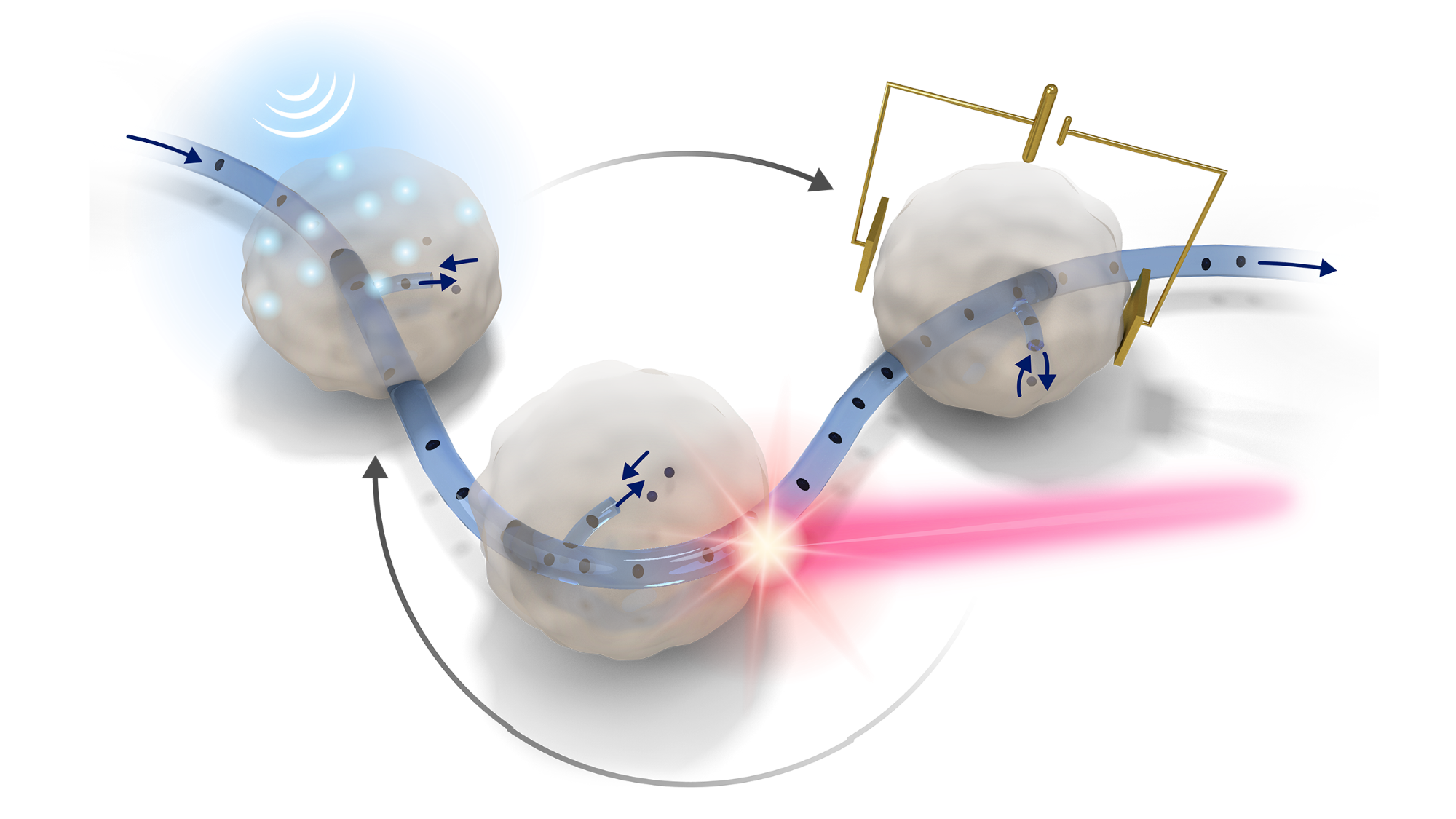
LP4 employs bioengineering approaches that provide multicellular systems with localized and integrated sensing, stimulation and feedback functions at micrometer resolution.
Click on the images to enlarge them and view the source.
Our Goal
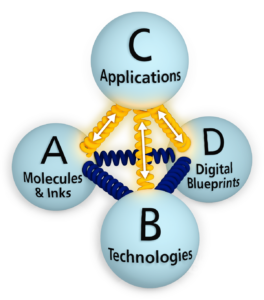
By utilizing novel 3D laser-printed materials (Research Area A), precise characterization methods (Research Area B), living multicellular systems (Research Area C), and machine-learning-based tools for the design of printed structures (Research Area D), LP4 researchers will bioengineer interconnected multicellular systems with unprecedented readout and sensing functionalities.
Custom 3D-printed microfluidics allow us to connect organoids into large structures that can be read out directly, providing unprecedented insights into early developmental stages of organoids. In addition, two-photon laser printing arrays of microelectrodes will allow us to electrically sense and stimulate brain and heart organoids in 3D.
LP4 will provide a particularly powerful, high-precision approach to address questions in stem cell biology, developmental biology, and tissue generation, while also enabling the study and generation of new disease models as platforms for drug screening and testing novel therapeutics.
Principal Investigators Involved
Jasmin Aghassi-Hagmann Karlsruhe Institute of Technology (KIT)