
Covers & Highlights
Selected journal covers from the first funding period of the Cluster of Excellence 3D Matter Made to Order (3DMM2O).
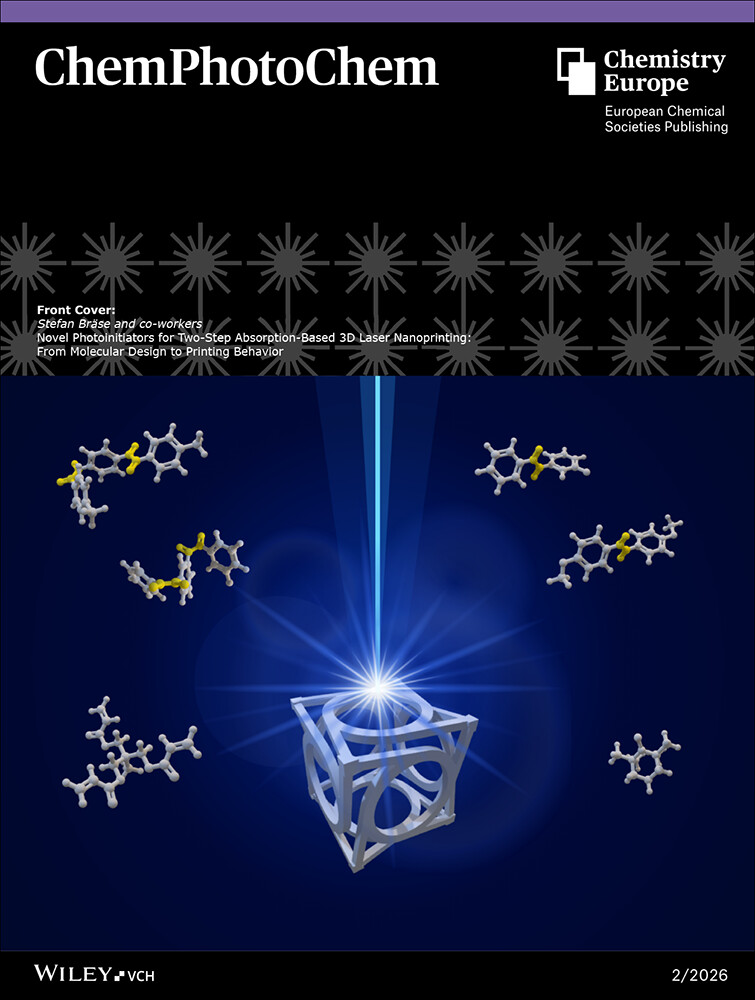
Front Cover: Novel Photoinitiators for Two-Step Absorption-Based 3D Laser Nanoprinting: From Molecular Design to Printing Behavior (ChemPhotoChem 2/2026)
Graphical Abstract
The Front Cover illustrates the molecular components and 3D printing approach applied in a new study. Photoinitiators, made up a central diketone unit (highlighted in yellow) in combination with the monomer PETA and the scavenger TEMPO, collectively form the photoresist, while blue laser irradiation enables fabrication of the depicted 3D structure. More information can be found in the Research Article by S. Bräse and co-workers.

Miniaturized Single-Photon Level Computational Complex Field Imaging System via Meta-Optics (Advanced Optical Materials 32/2025)
Graphical Abstract
This study presents a highly compact microscopic imaging system that employs a metalens to project Hadamard mask patterns, generated by the DMD, onto microsamples such as biological cells under low-light conditions with high resolution. The corresponding modulated intensities are then processed using a single-pixel imaging algorithm to effectively reconstruct the sample image. More details can be found in the Research Article by Qihao Jin, Uli Lemmer, Xuri Yao, Qing Zhao, and co-workers.

Printed High-Entropy Prussian Blue Analogs for Advanced Non-Volatile Memristive Devices (Adv. Mater. 8/2025)
Graphical Abstract
In article number 2410060 by Ben Breitung, Jasmin Aghassi-Hagmann, and co-workers, high-entropy metal organic frameworks (HE-MOFs) are employed as the active layer in sodium-modulated, non-volatile, printed memristors. These memristors exhibit low power consumption, self-compliance, and forming-free behavior, ideal for memory applications. The resistivity changes during operation arise from an insulating-metallic transition, driven by the distribution of sodium ions within the material. By leveraging the low-energy process of ion (de)insertion combined with a silver (Ag) electrode, the Ag/HE-MOF/ITO device demonstrates robust retention stability and a high ROFF/RON ratio, making it an efficient non-volatile memristor.

Scalable Non-Volatile Tuning of Photonic Computational Memories by Automated Silicon Ion Implantation (Adv. Mater. 8/2024)
Graphical Abstract
In article number 2410060 by Ben Breitung, Jasmin Aghassi-Hagmann, and co-workers, high-entropy metal organic frameworks (HE-MOFs) are employed as the active layer in sodium-modulated, non-volatile, printed memristors. These memristors exhibit low power consumption, self-compliance, and forming-free behavior, ideal for memory applications. The resistivity changes during operation arise from an insulating-metallic transition, driven by the distribution of sodium ions within the material. By leveraging the low-energy process of ion (de)insertion combined with a silver (Ag) electrode, the Ag/HE-MOF/ITO device demonstrates robust retention stability and a high ROFF/RON ratio, making it an efficient non-volatile memristor.

Cover Feature: Tetrazole and Oxadiazole Derivatives as Thermally Activated Delayed Fluorescence Emitters (Chem. Eur. J. 57/2024)
Graphical Abstract
Star-like molecules, like ninja stars decorated with oxadiazoles and carbazoles, show optimal performance as blue–green emitters with an 88 % photoluminescence quantum yield (PLQY) and fast rates of reversible intersystem crossing of 2×10⁶ and 1×10⁷ s−1, obtained from time-resolved photoluminescence (TRPL) featuring thermally activated delayed fluorescence (TADF). More information can be found in the Research Article by M. Kozlowska, S. Bräse, and co-workers.
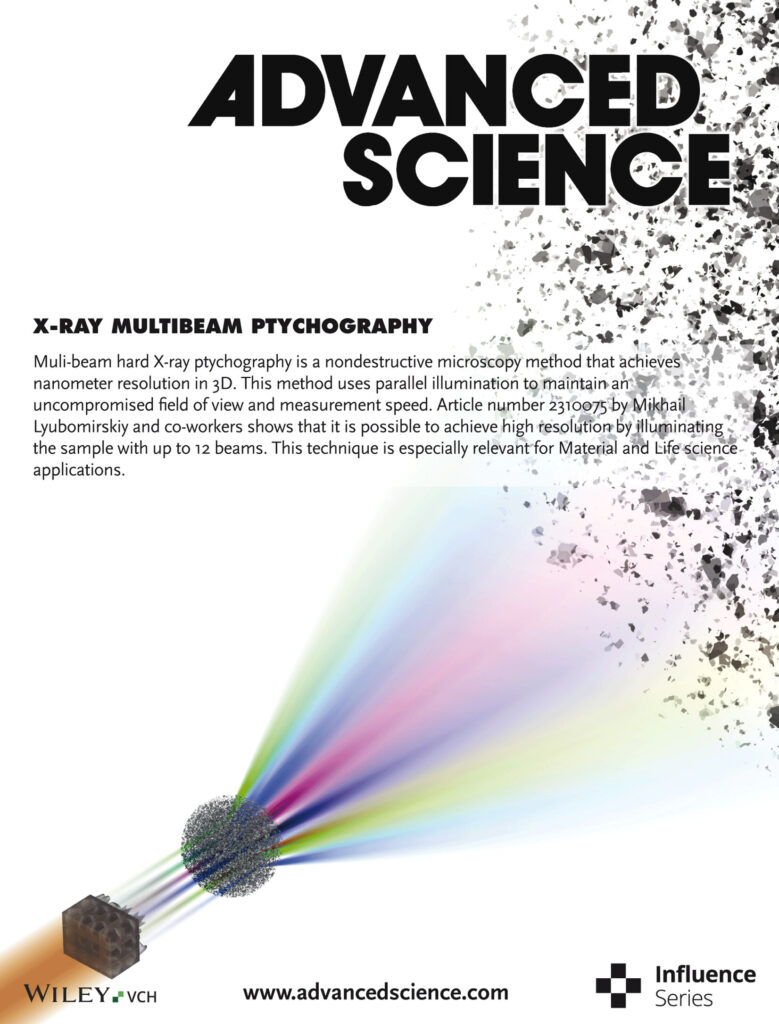
X-Ray Multibeam Ptychography at up to 20 keV: Nano-Lithography Enhances X-Ray Nano-Imaging (Adv. Sci. 30/2024)
Graphical Abstract
Muli-beam hard X-ray ptychography is a nondestructive microscopy method that achieves nanometer resolution in 3D. This method uses parallel illumination to maintain an uncompromised field of view and measurement speed. Article number 2310075 by Mikhail Lyubomirskiy and co-workers shows that it is possible to achieve high resolution by illuminating the sample with up to 12 beams. This technique is especially relevant for Material and Life science applications.

Bio-Metamaterials for Mechano-Regulation of Mesenchymal Stem Cells (Adv. Funct. Mater. 20/2024)
Graphical Abstract
In article number 2301133, Martin Wegener, Martin Bastmeyer, Motomu Tanaka, and co-workers design and manufacture microstructured bio-metamaterials based on an elastic photoresist and two-photon laser printing. The differential responses of human mesenchymal stem cells, both on the cellular level and the sub-cellular level, correlate with the calculated effective elastic properties of the bio-metamaterials, suggesting the potential of bio-metamaterials towards mechanical regulation of cells by the arrangement of unit cells.

Inkjet-Printed Tungsten Oxide Memristor Displaying Non-Volatile Memory and Neuromorphic Properties (Adv. Funct. Mater. 20/2024)
Graphical Abstract
In article number 2302290, Jasmin Aghassi-Hagmann and co-workers present an inkjet-printed tungsten oxide memristor showing the high conductive state with a grown filament (ECM type) suitable for non-volatile memory. Without an electroforming step, the memristor can be also used as an interfacial type device to perform neuromorphic learning and signal processing. All features can be integrated into novel printed electronic circuit architectures.
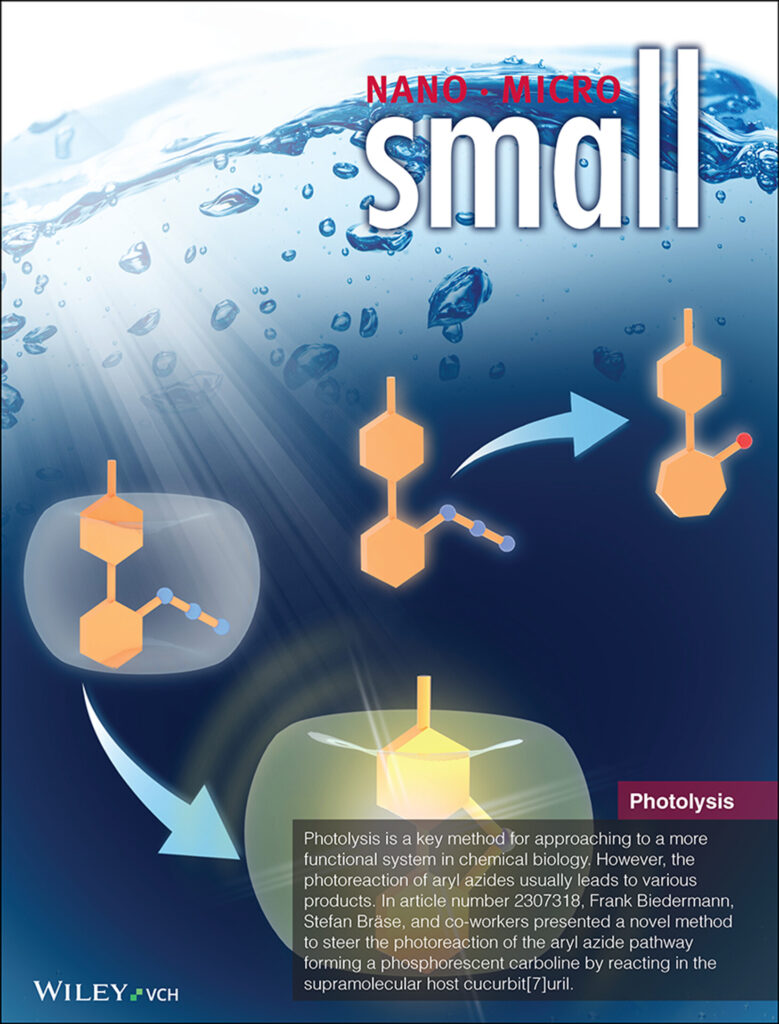
Modulating Aryl Azide Photolysis: Synthesis of a Room-Temperature Phosphorescent Carboline in Cucurbit[7]uril Host (Small 16/2024)
Graphical Abstract
Photolysis is a key method for approaching to a more functional system in chemical biology. However, the photoreaction of aryl azides usually leads to various products. In article number 2307318, Frank Biedermann, Stefan Bräse, and co-workers presented a novel method to steer the photoreaction of the aryl azide pathway forming a phosphorescent carboline by reacting in the supramolecular host cucurbit[7]uril.
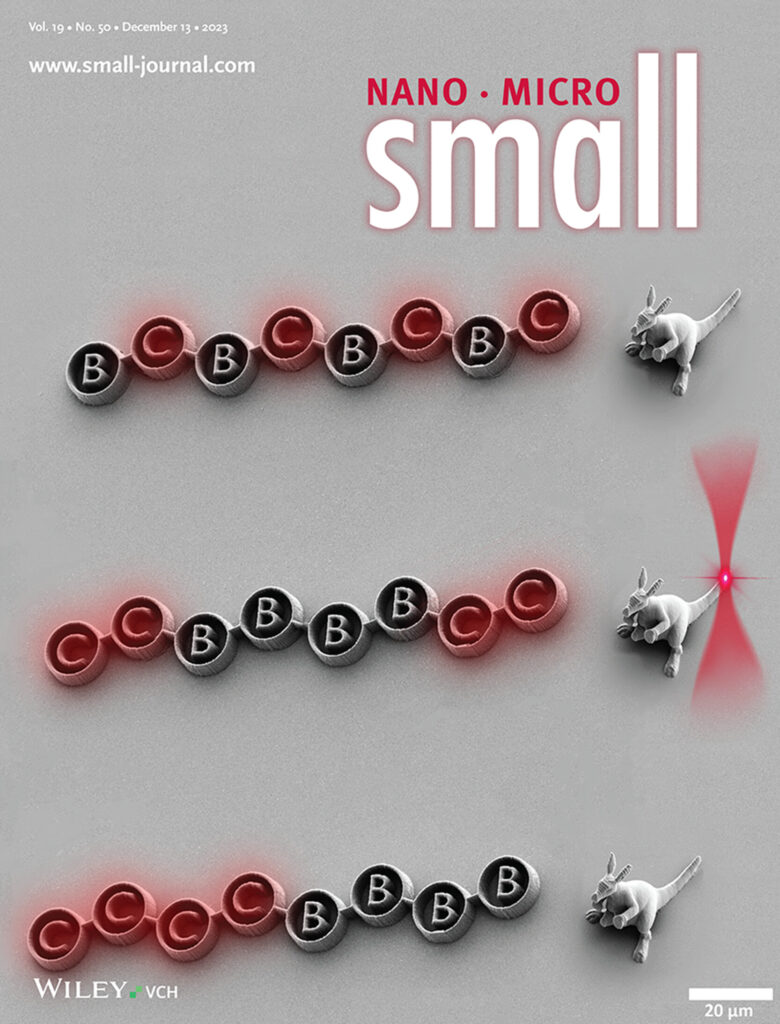
Macromolecular Engineering: From Precise Macromolecular Inks to 3D Printed Microstructures (Small 50/2023)
Graphical Abstract
In article number 2300844, Eva Blasco and co-workers design and synthesize three macromolecularly-defined inks for two-photon polymerization. Through precise control of the sequence of crosslinkable and non-functional groups in oligomeric backbones, the authors determine structure–property relationships between the molecular structure of the inks and the printability as well as chemical and mechanical properties of the resultant microprinted structures.
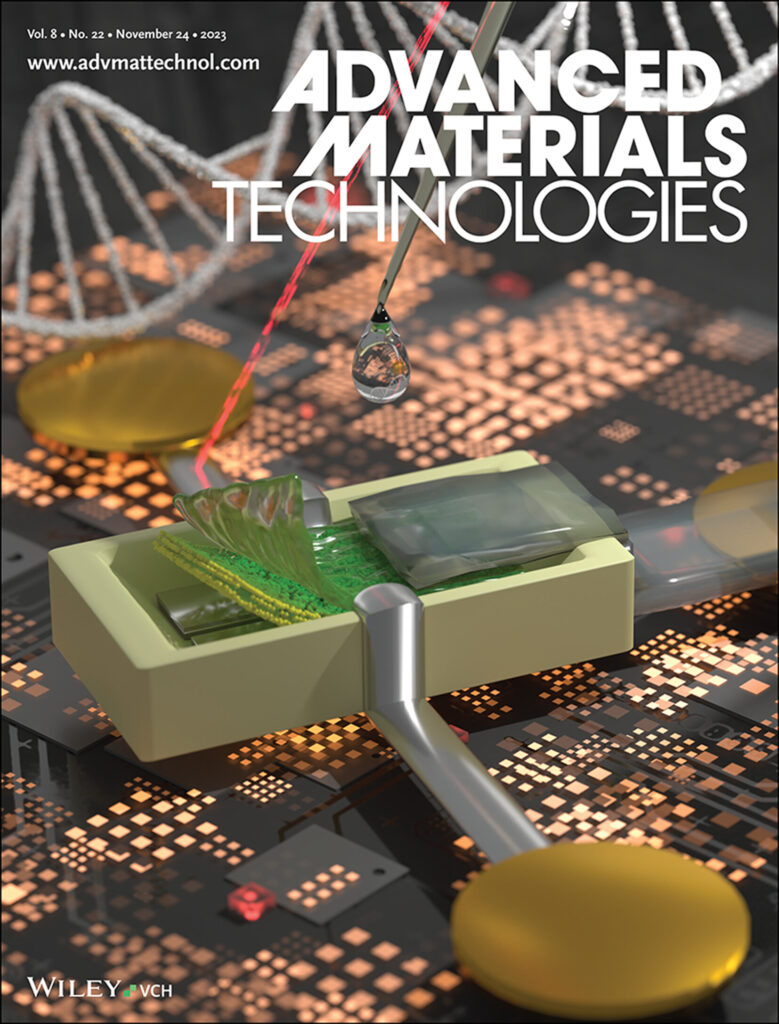
Fully Printed Electrolyte-Gated Transistor Formed in a 3D Polymer Reservoir with Laser Printed Drain/Source Electrodes (Adv. Mater. Technol. 22/2023)
Graphical Abstract
In article 2300893, Gabriel Cadilha Marques, Jasmin Aghassi-Hagmann, and co-workers exploit the combination of laser and inkjet printing methods to print microscale electronic components such as electrolyte gated transistors into 3D reservoirs. These functional 3D reservoirs can pave the way for novel bioelectronic sensor applications. Image credit: George Mathew contributed substantially to the image design.

Fluctuations of Dry and Total Mass of Cells Exposed to Different Molecular Weights of Polyethylene Glycol
Graphical Abstract
Using a special atomic force microscope, it is possible to measure variations in cell mass. By exploiting this technique, Federico Colombo, Christine Selhuber-Unkel, and co-workers discover that cells incubated with different molecular weights of PEGs undergo rapid fluctuations in their total mass, with each molecular weight causing distinct signature-like fluctuations. More details can be found in article number 2200156. Cover credit: Valeria Colombo.

Cover Feature: Diversity-Oriented Synthesis of [2.2]Paracyclophane-derived Fused Imidazo[1,2-a]heterocycles by Groebke-Blackburn-Bienaymé Reaction: Accessing Cyclophanyl Imidazole Ligands Library (Chem. Eur. J. 3/2022)
Graphical Abstract
The Groebke–Blackburn–Bienaymé three-component reaction (GBB-3CR) has contributed enormously to the progress of organic synthesis, medicinal chemistry, and materials science. Diversity-oriented synthesis of skeletally diverse cyclophanyl-derived fused imidazo[1,2-a]heterocycles by one-pot GBB-3CR involving formyl-cyclophane components in combination with various aliphatic and aromatic isocyanides and heteroaromatic amidines gives a library of versatile cyclophanyl imidazoles ligands. These can be readily transformed to prepare N,C palladacycles by regioselective ortho-palladation. More information can be found in the Full Paper by S. Bräse et al. (DOI: 10.1002/chem.202103511).
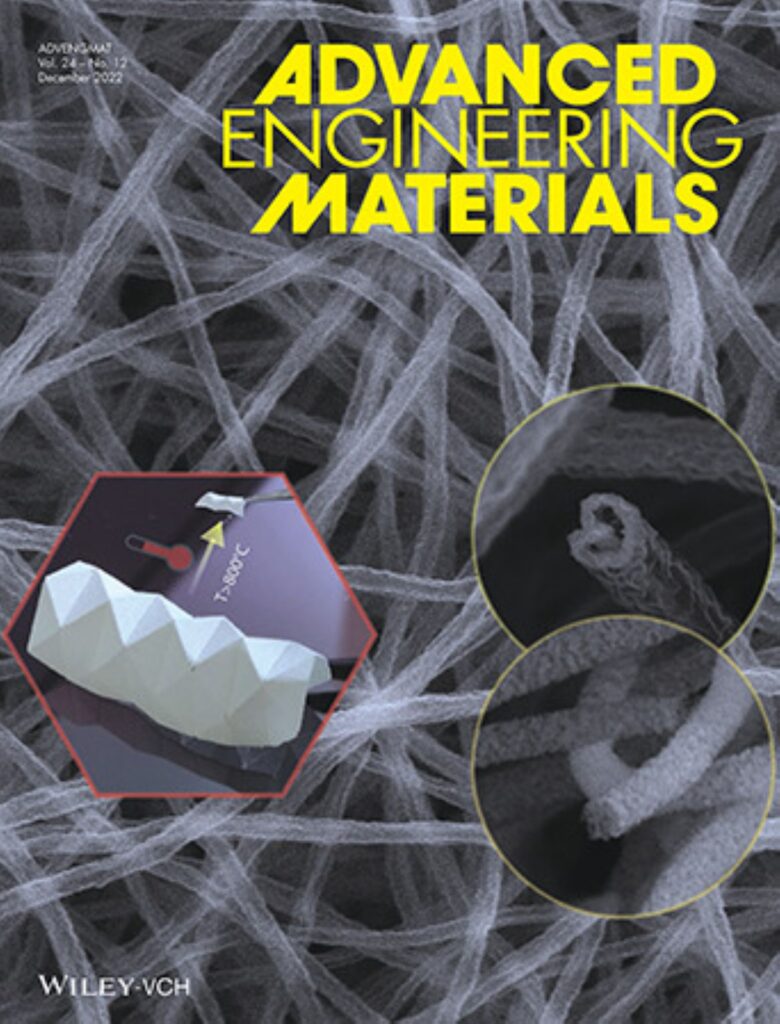
Preparation of Electrospun Porous Alumina Nanofibers for Origami-Inspired Manufacturing
Graphical Abstract
This work demonstrates origami-inspired manufacturing of alumina nanofibers as described in the article number 2201183 by Jan G. Korvink, Monsur Islam, and co-workers. Folding of an electrospun nanofiber sheet of a precursor materials followed by heat treatment results in the 3D origami structures of alumina nanofibers. The alumina nanofibers can be tuned to feature either porous or hollow morphology.

Correlated Study of Material Interaction Between Capillary Printed Eutectic Gallium Alloys and Gold Electrodes (Small 42/2022)
Graphical Abstract
In article number 2202987, Michael Hirtz and co-workers take a close look at gold/liquid metal contacts as they appear, e.g., in flexible electronics. By correlating complementary chemical and morphological characterization techniques, new details on the evolution of such contacts are revealed.
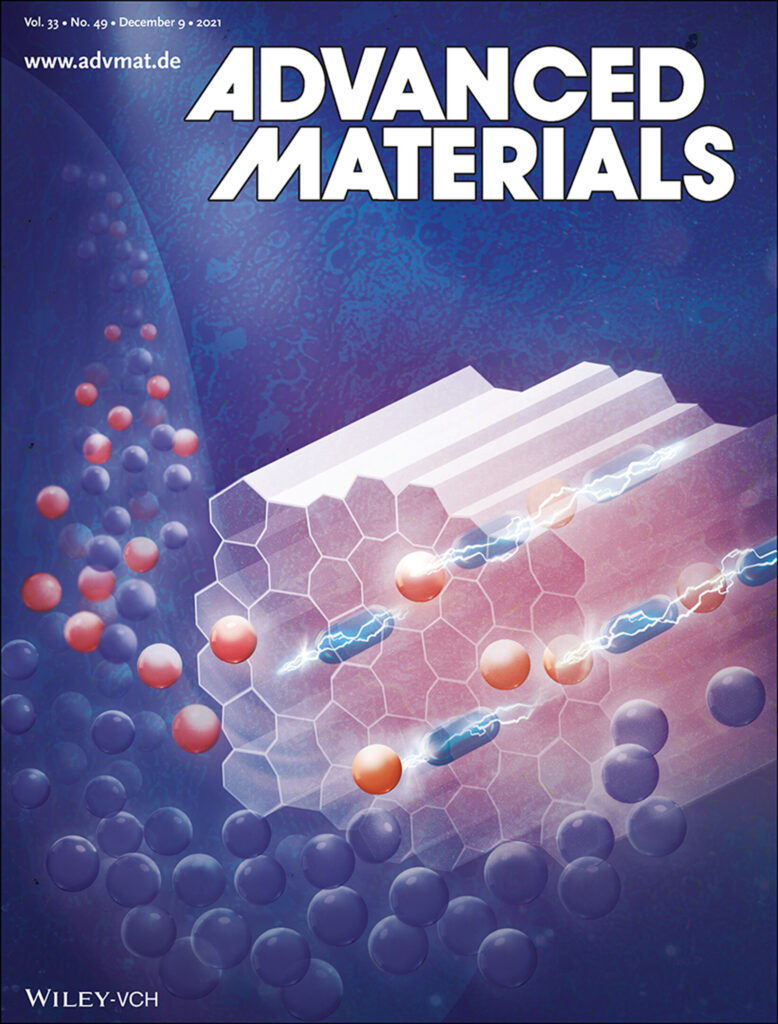
Fluorescent Nanozeolite Receptors for the Highly Selective and Sensitive Detection of Neurotransmitters in Water and Biofluids (Adv. Mater. 49/2021)
Graphical Abstract
So far, only modestly performing synthetic binders have been accessible for small bioactive molecules such as serotonin and dopamine. In article number 2104614, Luisa De Cola, Frank Biedermann, and co-workers introduce zeolite-based artificial receptors (ZARs), which are microporous inorganic–organic hybrid materials applicable for the optical-based detection of serotonin and dopamine in urine at physiological relevant concentrations. These ZARs outperform protein receptors with respect to response times, robustness and scalability.

Front Cover Picture: Multigram-Scale Kinetic Resolution of 4-Acetyl[2.2]Paracyclophane via Ru-Catalyzed Enantioselective Hydrogenation: Accessing [2.2]Paracyclophanes with Planar and Central Chirality (Adv. Synth. Catal. 11/2021)
Graphical Abstract
The front cover picture was designed by C. Zippel, Z. Hassan and S. Bräse. Kinetic resolution of 4-acetyl[2.2] paracyclophane via ruthenium-catalyzed enantioselective hydrogenation has been realized. This method can be performed on a multigram-scale and gives access to enantiomerically pure derivatives with planar and central chirality of (Rp)-4-acetyl-PCP (97% ee, 43%) and (Sp,S)-PCP derivatives (97% ee, 46%), which are useful intermediates since it can be transformed into a wide variety of enantiopure paracyclophane derivatives for the synthesis of PCP-based ligand/catalyst systems and chiroptical materials. Details can be found in the Update by Stefan Bräse and co-workers (C. Zippel, Z. Hassan, A. Q. Parsa, J. Hohmann, S. Bräse, Adv. Synth. Catal. 2021, 363, 2861–2865; DOI: 10.1002/adsc.202001536).

Cover Feature: A Hexagonal Shape-Persistent Nanobelt of Elongated Rhombic Symmetry with Orthogonal π-Planes by a One-Pot Reaction (Eur. J. Org. Chem. 8/2022)
Graphical Abstract
The Cover Feature shows the molecular structure (spacefill model; atoms of hydrogen are depicted in white, carbon in grey, nitrogen in blue, oxygen in bright red, and bromine in red) of the nanobelt synthesized by Lauer and colleagues. The nanobelt “swims” in a sea of many other oligomeric, polymeric, and monomeric structures and is “fished out” selectively by gel permeation chromatography, represented by a fishing hook. More information can be found in the Full Paper by M. Mastalerz et al.
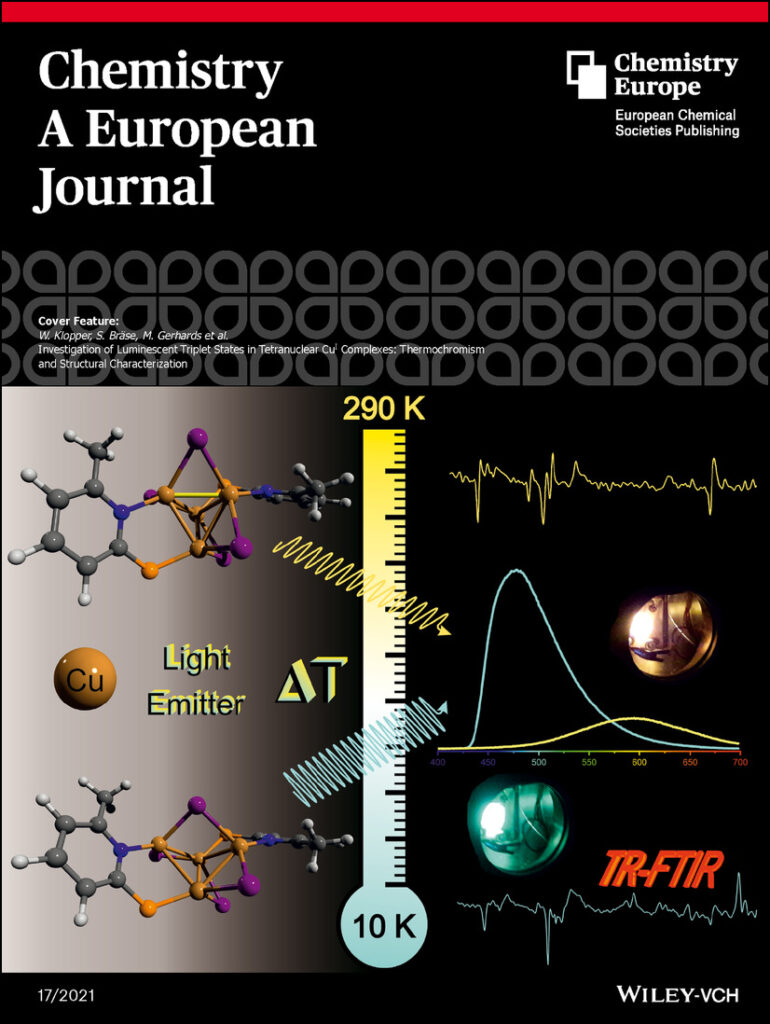
Cover Feature: Investigation of Luminescent Triplet States in Tetranuclear CuI Complexes: Thermochromism and Structural Characterization (Chem. Eur. J. 17/2021)
Graphical Abstract
Highly luminescent tetranuclear CuI complexes are discussed in this work, along with their synthesis and in-depth photophysical characterization. These promising candidates for organic light-emitting diodes show a huge luminescence thermochromism with completely different emission colors ranging from orange-red (290 K) to blue (10 K). The underlying strongly temperature-dependent excited state structures are determined by applying time-resolved step-scan FTIR spectroscopy in combination with DFT calculations. More information can be found in the Full Paper by W. Klopper, S. Bräse, M. Gerhards, et al. on page 5439.

DNA Nanotechnology: Engineering Light-Responsive Contractile Actomyosin Networks with DNA Nanotechnology (Adv. Biosys. 9/2020)
Graphical Abstract
In article number 2000102, Ilia Platzman, Kerstin Göpfrich, Joachim P. Spatz, and co-workers engineer minimal contractile actomyosin networks for synthetic cells. They employ DNA nanotechnology combined with light-triggered actuation to control the contraction dynamics. Symmetry breaking is achieved and quantified in cell-sized compartments, showcasing how an engineering approach to synthetic biology can provide a shortcut toward complex function.

Voxels: Rapid Assembly of Small Materials Building Blocks (Voxels) into Large Functional 3D Metamaterials (Adv. Funct. Mater. 26/2020)
Graphical Abstract
In article number 1907795, Vincent Hahn and co-workers manufacture a mechanical metamaterial containing more than one hundred thousand chiral 3D unit cells and more than three hundred billion voxels by using rapid multi-focus multi-photon 3D laser printing. This technology uses an array of 3 × 3 laser foci and allows for sub-micrometer voxel sizes at printing rates of about ten million voxels per second.

Front Cover: Liquid-Phase Quasi-Epitaxial Growth of Highly Stable, Monolithic UiO-66-NH2 MOF thin Films on Solid Substrates (ChemistryOpen 5/2020)
Graphical Abstract
The front cover shows a successful synthesis of high quality, monolithic UiO-66-NH2 MOF thin films on diverse solid substrates via a low-temperature liquid phase epitaxy method. The achievement of continuous MOF-coatings with low defect densities and pronounced stability against high temperatures and hot water was proven. The new type of coatings clearly outperforms other reported types of MOF thin films. More information can be found in the Communication by Tawheed Hashem et al.

Photonic Nanomaterials: Merging Top-Down and Bottom-Up Approaches to Fabricate Artificial Photonic Nanomaterials with a Deterministic Electric and Magnetic Response (Adv. Funct. Mater. 3/2020)
Graphical Abstract
In article number 1905722, Kay Dietrich, Thomas Siefke, and co-workers investigate the transformation of a subwavelength nanostructured metasurface with electric and magnetic responses to a photonic bulk material from morphological and optical perspectives. Departing from a periodic structure, a randomized orientation and arrangement of the metaatoms is forced that preserves their magnetic and electric response. This material combines the advantages of materials fabricated with both top-down and bottom-up techniques.
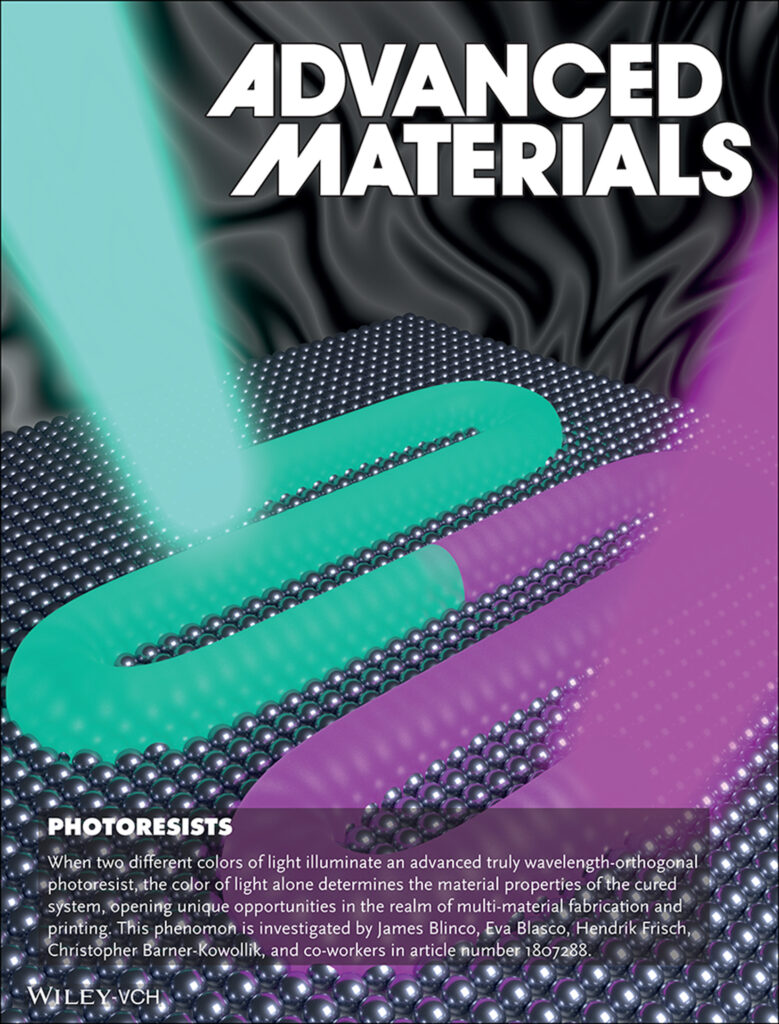
Photoresists: Access to Disparate Soft Matter Materials by Curing with Two Colors of Light (Adv. Mater. 8/2019)
Graphical Abstract
When two different colors of light illuminate an advanced truly wavelength-orthogonal photoresist, the color of light alone determines the material properties of the cured system, opening unique opportunities in the realm of multi-material fabrication and printing. This phenomon is investigated by James Blinco, Eva Blasco, Hendrik Frisch, Christopher Barner-Kowollik, and co-workers in article number 1807288.