
Ultrafast laser pulses enable thenext generation of nanoscale3D additive manufacturing
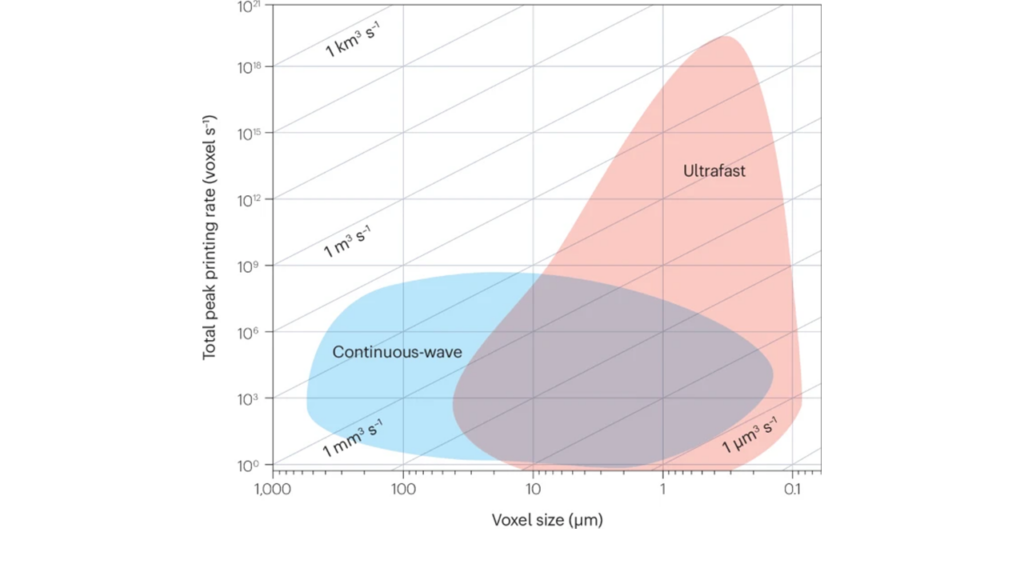
A new Cluster article in Nature Reviews Methods Primers examines how ultrafast laser pulses can advance nanoscale 3D additive manufacturing. Postdoctoral Researcher Paul Somers and Principal Investigator Martin Wegener describe how shaped light pulses could increase the speed and resolution of light based 3D printing. Conventional multiphoton 3D lithography creates structures by mechanically scanning a […]
What makes your smartphone light up? The magic behind OLEDs
What do molecules have to do with your smartphone display? Quite a lot. Organic light-emitting diodes (OLEDs) enable the bright and vibrant images we see every day. In the latest episode of our “Explain Like I’m Five” series, Lisa Janz, Cluster Doctoral Researcher at Karlsruhe Institute of Technology (KIT), explains how OLEDs work and why […]
Putting Fast Hydrogel Chemistry on Pause
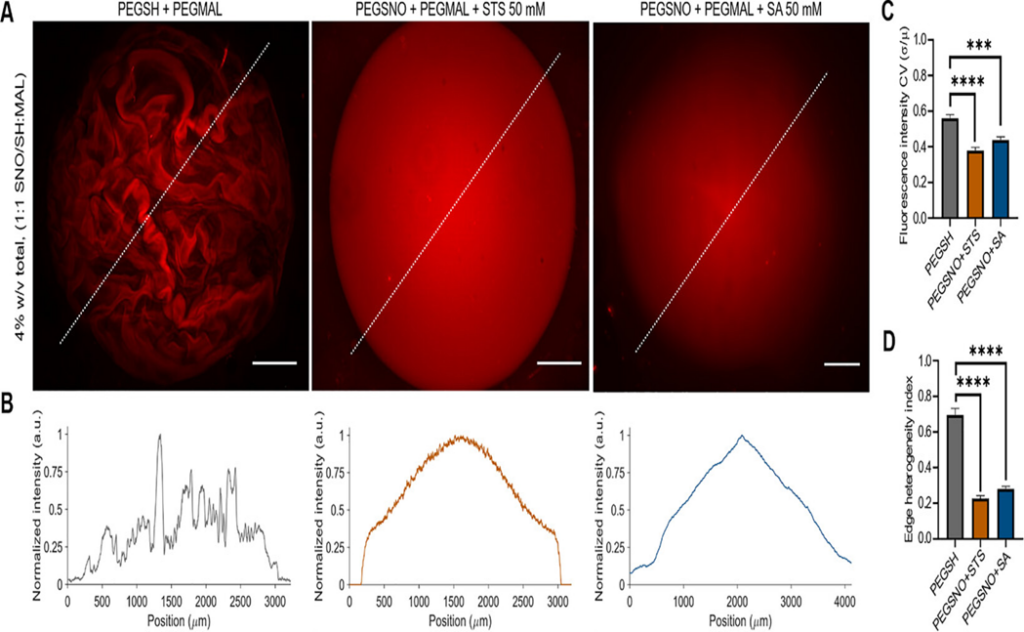
A new Cluster publication in Advanced Materials introduces a strategy for forming soft hydrogels more reliably. Doctoral Researchers Julian A. Serna, Michelle J. Iwohn, and Maike Schliephake, together with PI Pavel Levkin, temporarily “protect” thiols with S-nitrosothiols to prevent thiol-maleimide reactions from starting before polymer components are fully mixed. This controlled delay enables homogeneous mixing before crosslinking […]
Turning Light into a Catalyst-Free Click Reaction
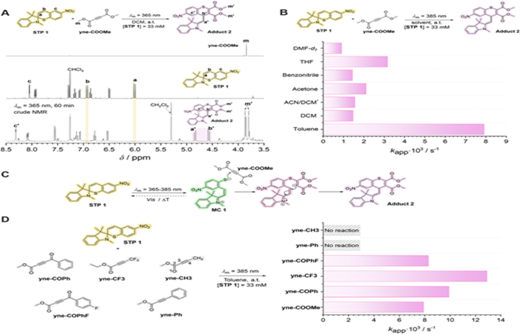
In a new Cluster publication in the Journal of the American Chemical Society, Postdoctoral Researcher Linh Duy Thai and PI Christopher Barner-Kowollik present a light-controlled thiol–yne photoclick reaction that works without added catalysts. The team uses a spirothiopyran photoswitch as a photoactivatable thiol source. Upon irradiation, the molecule switches into a reactive form that enables thiol–yne […]
3D Printing Summer Workshop
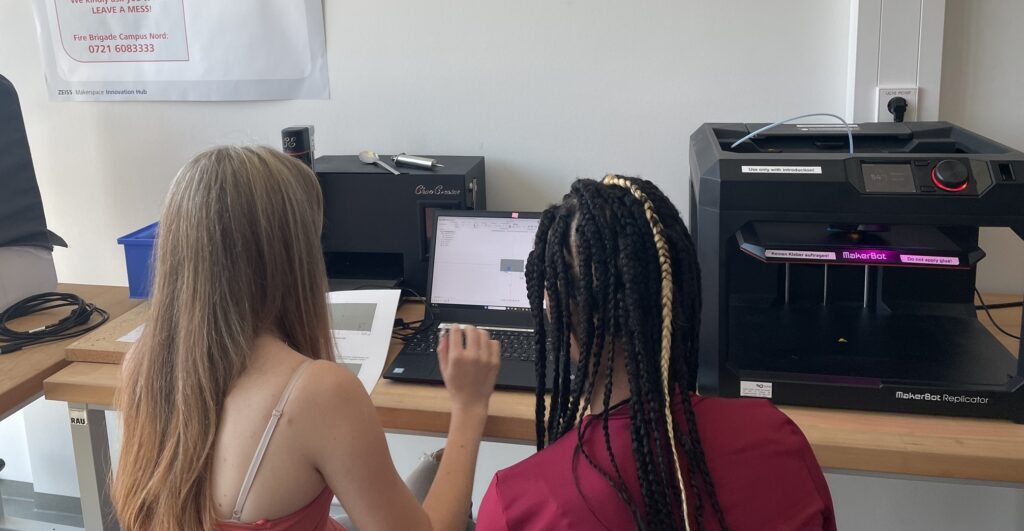
On August 11–12, 2026, the Cluster hosted its 3D Printing Summer Workshop at the ZEISS Innovation Hub. The two-day program is tailored to young women between 13 and 19 years of age and aims to give school students with an interest in STEM an insight into how 3D printing works. During the workshop, participants followed […]